Friday, January 27, 2006

Amended: Frightening children! (via TheMorningNews.com) And still more feats of pictoral weirdness at We Could be Heroes!

Notes from the Highway

Usually, my drive morning down the 10 East is not very interesting. It's besotted by routine -- NPR and Morning Edition's daily reportage on Iraq, my frustration with Marketplace's cutesy introductory tagline, and, when I'm feeling more frivolous and very tired, a medium sized English Breakfast Tea Latte from the Coffee Bean. Today was no different. But then I got onto the interchange for the 110, and in front of me was this great burgundy Toyota pick-up with the bumper sticker "Art Warrior." And above that, on the tailgate, there was a worn bumper sticker for "brushbymiho.com".

So, I was compelled to visit the site because the quiet publicity of her bumper stickers made me really interested in seeing what the deal with this person was. And I think her promotional strategy is perfect for Los Angeles. The line between publicizing yourself by getting the word out and overdoing it is a little difficult to tread, and even though I'm usually wary of bumper sticker websites, I think it was her awesome, no-bones truck that made me surf toher URL. After visiting, it also made me wonder why more people -- i.e. artists (besides Dennis Woodruff, I suppose) -- here in L.A. don't use this strategy deftly and quietly. I think, if done tastefully, it could do wonders...

Thursday, January 26, 2006

Ashlee Simpson and the Suburbs

Music Video Review
Artist: Ashlee Simpson
Song: "Lala" (Scroll down for "Lala" and its many streams)
Album: "Autobiography"
Director: Joseph Kahn

"Lala" begins with a standard suburban grid, some quick shots of girls hanging out, and then a closer view of a section of the grid. Soon, the camera closes in on Ashlee Simpson lazing about, and then takes in the shopworn symbols of the suburbs: a one-story house, power lines, trucks and minivans. To emphasize the terrain's superficiality, mirrors, glass, and chrome are glintz-ified. And after these quick-shot cliches, there comes a reward: there's a really beautiful shot of a slightly coiled, green water hose. It's simple and understated--almost obvious, but not quite. The hose is what made me think this video had potential to find the strange beauty of banality. I wanted to say that the colors sort of reminded me of Dan Graham's "Homes for America" and I kind of wanted it to have the sharp observation characteristic of a Stephen Shore photograph.

But that quickly seemed an inept comparison. The video has the fundamental flaw of not really know what it's doing. What ensues is Simpson hanging out with her girls, doing suburban teenage rebel-type stuff. They stomp on the roofs of minivans, they kick down garbage cans, and loiter in the parking lots of donut shops. They laugh at skaters who fall flat on their tricks. And Ashlee throws her soft drinks at annoying boys. While this felt a wee bit sophomoric, as these images flickered by, I decided I really liked the fact that Simpson isn't really trying to get the attention of a boy. And, it's pretty cool that she doesn't use the video to make herself out to be a foresaken victim. I like that she's hanging with her girls playing videogames, that after a party gets broken up by the cops, she leads her friends to the laundromat. That's all fine and good until you listen to the lyrics: she's singing a song that seems to imply that she's hanging out with someone she wants to--you know--"lala" (an Ashlee-coined phrase, I believe). And, as one might suspect, this strange inconsistency reveals that neither Simpson nor Kahn are really thinking through the concept of the video -- and how it relates to the song.

With the video, Ashlee Simpson is trying to prove that she's really fun to hang out with because she's mean to other people who, she deems, suck. But, in one short take, even the concept of her being a cool friend to hang out with is slightly lost on us. Remember how she threw soft drink cups at annoying boys? It's not so black and white: in fact, while her friends are pushing her in a shopping cart, she even throws her soft drink cups in the air and they hit her friends. This--and the posture of putting down people who fall down--didn't make me want to hang out with Ashlee Simpson.

I suppose the odds of my potential friendship with Ashlee Simpson were against us from the start. I don't really like her voice. She's got the Frankensteinian jauntiness of Shakira without the awesome ab-rolling capabilities and, let's admit, she can't really dance as well as Shakira anyway. While I was a high school nerd who is still a nerd and doesn't like drinking soda, she has crowned herself the queen of teenage rebellion with her extra-large soft drink in hand. If your friends are supposed to relate to you, it's incumbent upon me to hint that I probably wouldn't relate to Ashlee Simpson. But I do find her kind of fascinating. The interest lies in the fact that she's so steeped in cliches that she fumbles in her attempts to execute them. She's the younger sister who dyed her hair black because she wanted to be different, but she still wants to be a pop star. She starts feuds with other starlets (i.e. Lindsay Lohan) because she starts hooking up with their boyfriends, but then wants their friendship back. There's something almost comforting about the fact that she is a kind of cultural figure that won't go away.

"Lala" solidifies Simpson's rather unenviable position. It's a shopworn look at the suburbs and that's precisely why it renews one's interest in the suburbs. It's almost as though "Lala" is the last straw to the suburban boredom of "Madame Bovary" and the popular "American Beauty"dictum that the suburbs aren't what they seem. I realize these are large works to compare a silly music video to -- obviously. But I think the comparison is emblematic of just how flat the rebellion against the suburbs is. It's now a really easy topic to dismantle, and its symbols have become almost anaesthetic. So we have to find different ways of observing it. What makes "Lala" as interesting to me is that Simpson is the perfect pop star to end the suburbia debate with a whimper. For no one attempts to rebel with more un-self-conscious self-consciousness than Ashlee Simpson. And that is precisely the problem with the argument against the suburbs: it doesn't acknowledge how cliche its position has become.

Paradise Lost

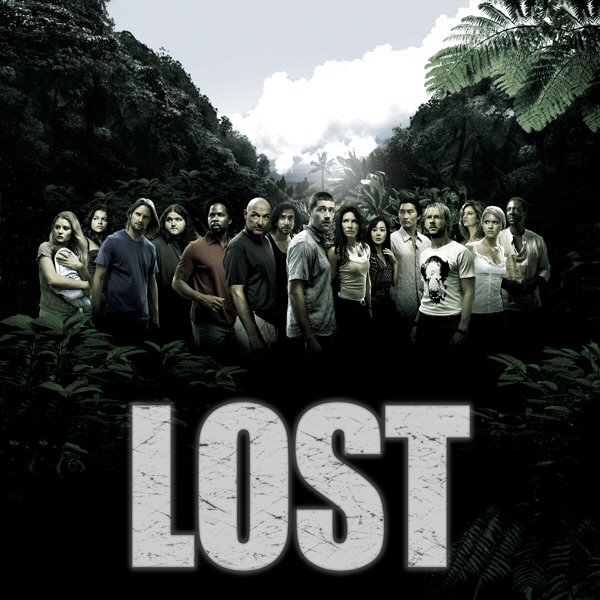
What's happened to LOST? Formerly the show that brought you the reinvention of television narration, it's fallen flat, and borderline comatose-inducing this season. What happened to the great storytelling of "Walkabout" or the energy of the insanely wonderful second season opener "Man of Science, Man of Faith"? Last night's episode, "Fire and Water," another rehashing of Charlie's drug obsession, was just another example of how boring Charlie's addiction story is and has become. I used to giggle every time I heard the refrain "Come on, everybody!" but after seeing DriveShaft in all their infantile/junkie glory, I just wanted to start watching "Project Runway" and Heidi Klum and her bump instead.

Every time LOST attempts to do one of these Charlie addiction episodes, something always falls flat. Even during the first season when we were introduced to Charlie's habits in "The Moth," the schtick felt a bit weathered and already overused. But it's become a go-to theme for the island to which all our characters were brought "for a reason" (Locke's infamous quote). One of the brilliant points that was brought up during our friend-filled screening last night was that the characters seem to not focus on what happened on the episode before, as though they can put action-filled stuff on hold. In last week's show, Michael went after Walt, Jack made Locke go after Michael (and Sawyer hopped on the bandwagon), and then Kate went after the triple threat. The Others captured Kate, pointed a gun at her head, and threatened to kill her if Jack, Locke and Sawyer didn't hand over their guns and go back to camp.

As "Survivor"-esque as the magical torch-lighting might have seemed for that scene, there was some interesting tension. But it's all been forgotten in Charlie's "crazy" episode. Kate is trying to protect Claire from Charlie's misbehavior, but there is no sign that she's traumatized or bedraggled by the experience. She's only concerned about Jack's budding friendship with Ana-Lucia? That seems a little thin to me. Speaking of Ana-Lucia, what happened to the awesome army that she and Jack were going to build together, using Michelle Rodriguez bad-girl expertise? Also, where's Rousseau? And perhaps more importantly, where is Michael?! Has he found Walt? What has Walt been up to? Who are these Others? Why don't we get to see what the deal is with them? A fantastic analogy to this phenomenon was also made last night: LOST has become some sort of boardgame. Instead of dealing with and juggling the stories efficiently and engagingly, we pause simply to see how one person is dealing with their flaw. This is LOST not Sorry! The approach seems lethal for a television show that's based on character-driven action. Where has all the action gone? And a Charlie-concocted fire doesn't count.

Oh, LOST! I only ask these questions because I know you can do better. There are so many strands that the show can start tying together, so many storylines to further. But hitting us over the head with faith seems like a strange strategy for putting it all into place. There's more on the island. You can have the faith, but let us see the adventure too.

Wednesday, January 25, 2006

The Cock and Bull Story

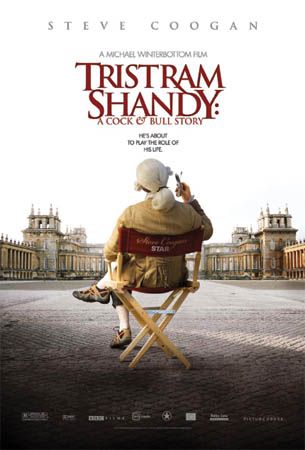
Last night, I had the pleasure of going to a preview of "Tristram Shandy: A Cock and Bull Story," courtesy of KCRW. I thought it was a delightful romp of a film. The premise is that we see Steve Coogan during a couple days of the shoot of "Tristram Shandy," a movie that all proclaim cannot be made because the book is so fraught with strangeness and such wealth of material. (Apparently, the first scene of the book, The Life and Opinions of Tristram Shandy, is Tristram-as-homunculus traveling between his father and mother!) So, instead, this film shows the cogs of filming an impossible movie, bits of the movie itself, and focuses on "Steve Coogan's" life while on set. It has, obviously, the same flavor as "Adaptation," particularly the scene when Charlie Kaufman is on the set of "Being John Malkovich." But, as zany as it is, I would say "Tristram" was a little bit more tucked in than its predecessor, a little less insane (which I think serves it well), and very funny. It features wicked humor and a nice, palatable voyeuristic quality that is delightful to watch. But something, I thought, was missing.

The film is chock-full of exacting moments, ones that I fear giving away because they're too delectable to have spoiled. The first scene will hook you with its wit, and, as far as the other parts, I'll say this: watch for insane 'introductory' battle, young Tristram, babies, wombs, references to Fassbinder, Steve Coogan and his agents, and stay for the bookend Coogan-Rob Brydon exchange during the credits. This is a very smart movie that tickles in most of the right places. But what I found interesting was that it puts Steve Coogan in a similar position to Charlie Kaufman of "Adaptation," but here we have a star with a bit of a star complex, but still personable. While I truly adore Steve Coogan, I didn't root for him in the way I rooted for Charlie Kaufman. Maybe it's because I've only recently been introduced to "Knowing Me, Knowing You with Alan Partridge," but I think it's something else. Because Coogan's not as pathetic a figure, my emotions weren't as caught up with seeing him succeed or prevail. There is emotion -- I repeat, babies -- but Coogan just doesn't warrant as much sympathy from me as a sweaty, balding guy who has problems with his family and with getting girls.

It's only right that I should emphasize again that I haven't read the novel, so I think part of the insanity of the film is lost on me. But the general conception of everyday life getting in the way of telling a story rings true here. And my interest in watching the film was perpetuated by this sense of the everyday: I loved seeing the castle they were filming in, the costume racks, and the sometimes strained relationships between the people who worked on the film. This, I believe, is the major point.

On a small critical note, I kept looking for Michael Winterbottom, but was a little disappointed when it held itself apart from being super-meta by employing Jeremy Northam to play "Mark" the director of this fake "Tristram Shandy" film instead of Winterbottom playing himself. I think that would have added an interesting and more consistent touch. But I almost feel criminal saying such things without having read "Tristram Shandy" the novel. And, added to this, I'll admit to expecting almost divine things of Winterbottom, as the film is already impressive for its seamlessness and its ability to shuttle its audience off from the making of the film to the film itself so effortlessly.

For all my nitpickiness, the film is a pleasurable experience. It's not only a period piece -- poorly, hilariously made -- but an interesting look into what film-making is. And it's doubly refreshing because it makes movie-making into a tiresome business. For all its triumphs and its minor flaws, I heartily recommend it. And it's done what few adaptations can do: it's compelled me to read the book.

Monday, January 23, 2006

Bleh on "Entourage"

Even though it would behoove me most to be watching seasons 1 through 5 of "The Sopranos" right now, I'm thinking about how much I loathe "Entourage". The show, now on hiatus and poised for its third season, was acclaimed by Alessandra Stanley as the best TV show of 2004 and thoughtfully dismissed by Dana Stevens for its "four callow jerks." And, although this is an opinion typed a year behind schedule, I am in hearty agreement with Ms. Stevens.

First, a concession: The ur-Ari Gold--Ari Emanuel, interminable king of Endeavor--is amazing to watch work. Seeing him the few times I did in real-time, in the flesh, and in action, yours truly-- as a mailroom neophyte--was bowled over by his infinitely various renditions of the word "fuck", and how he attacked his phone calls with the vengeance and tenacity of a raging rodeo bull. My stories don't do the mythic Ari-ness justice because his legendariness is courtesy of Defamer, who poke the best kind of fun at Emanuel and his goat-ish glee. (Quite simply, it warms my heart that they expedite his HuffPo rants onto its pages in nano-seconds.) Their charming updates help restore, even in me, post-Hollywood amateur critic, Emanuel's insanely lavish, cut-throat-lined mythology. And Jeremy Piven takes the beast head on, portraying Emanuel's quick wit and knife-sharp tactics with precision. His scenes make up the icing that holds "Entourage"'s chalky, cakey substance together.

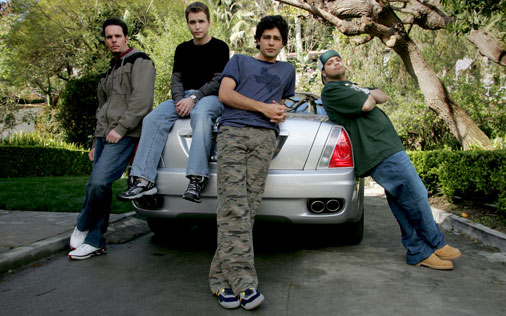
courtesy of http://upload.wikimedia.org/wikipedia/en/2/2d/Entourage_guys4.jpgWhat gets me about the rest of "Entourage" is its vapid vacancy. I get that Vince is a hot star; I get that he has a posse; I'm even slightly interested in the fact that this has some backstory in Mark Wahlberg's life. But I find it frustrating that it reinforces every male stereotype that makes Hollywood--and men in general--as undreamy and repulsive as it sometimes is/they sometimes are. The poaching wars are wonderfully delectable to watch, but how many times do we have to linger over Vince having banged some hot one night-stand girl? And how can his erratic behavior with Mandy Moore (in those dreadful "Aqauman" episodes) be counterpoint to his mindless witlessness? Who cares if Turtle smokes up all the time? Do I really want Vince's brother to get an acting job? Is Eric's loyalty to Vince the only evidence of his bland mind-cum-heart of gold? Why should I care why these "fame... with friends" people stay together as a clan? And when, exactly, will these characters be dignified with a depth that hits you in the heart?

Some say, particularly those polled in Stevens's article, that the male-bonding is what keeps them watching. What's the deal with all this bonding-resonance in "Entourage"? Perhaps the best question: Is this the same phenomenon as "Sex and the City" but with Y chromosomes? Honestly, I don't know. For me, as an XX, "Sex and the City" always seemed to show relatable flaws, even if they were at the cash register at Manolos. There is something universally terrifying about romantic relationships that I think spoke to women who were watching the well-coiffed quartet; there also seemed to be dimensionality to the characters, a certain sense of honest failure that kept them somewhat human. Heartwarming, though sometimes sappy, I was repulsed -- even by its worst episodes -- so much less by the quartet of New York-ettes than I have been by HBO's Hollywood hoodlums. "Entourage," while showing the sins of temptation and the flaws that capitulate to them, features those temptations in the most simultaneously wonderful and inane of places (Hollywood) with characters whose existence lies solely on superficial overdrive. And it's tiresome.

I used to know some dudes who absolutely loved "Entourage." I would venture to guess, though, that it was because the show is an onanistic meditation on what they hoped to become -- i.e. agents and studio execs with hot, button-nosed accessories on their arms. And because it's the kind of thing Hollywood insiders love to pride themselves on having gone through, or being a part of. But the humor of all of this was redundant to me--and, I would guess, completely unrelatable for the people watching who don't know who Jim Wiatt is. So, here are my final two questions: Why couldn't this entourage be something more interesting than that? And why can't the writers take Dana Stevens's advice and aim for surprise, instead of rote Hollywood one night stands?